Marking processes guide
Every fabric and every volume calls for a different marking technique. This guide covers the processes we use on PPE, workwear and their accessories. For tailored advice, see theCustomisation page or request a quote.
Embroidery
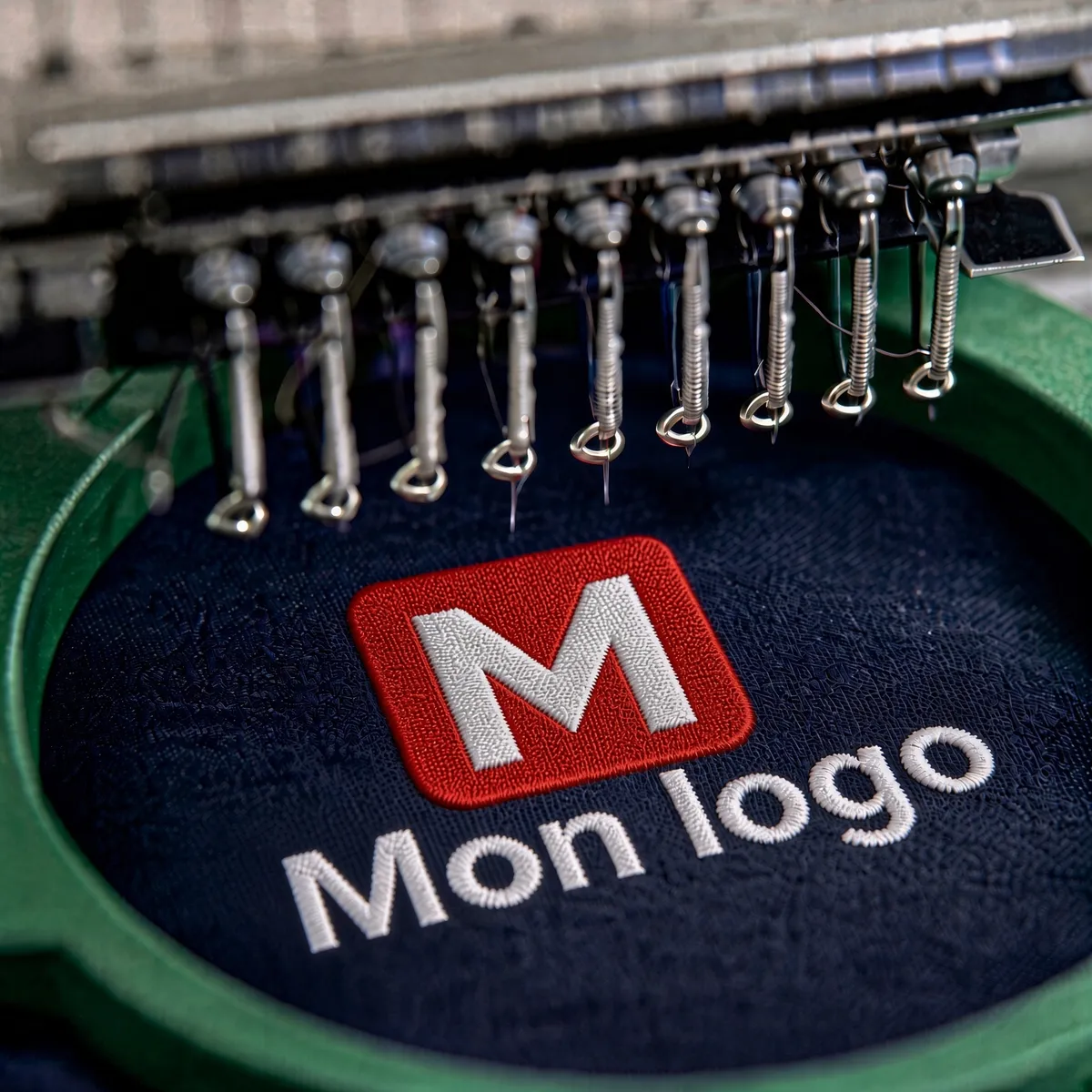
The logo is stitched directly into the fabric, with up to 15 thread colours (around 370 shades available). The most premium technique for corporate garments worn every day.
Pros
- High-end, representative appearance
- Excellent mechanical durability and long life
- Ideal for polos, sweatshirts, jackets, beanies and caps
Limitations
- Higher price for sophisticated designs
- Very large designs can stiffen the fabric
- Colour gradients cannot be reproduced faithfully
Screen printing
Ink is pushed through a stencil, colour by colour, up to 8 colours. The reference for smooth, flat surfaces and large runs.
Pros
- Durable, high-quality marking with vivid colours
- Excellent value on large orders
- Perfect for large formats (jacket backs, vests)
Limitations
- Less suited to small runs (set-up costs)
- Not possible over edges and seams
- Slightly longer production
Transfer (heat-applied marking)
The design is printed on a film then heat-pressed onto the fabric. A sharp, precise marking, suited to detailed or multicolour logos, including small runs.
Pros
- Sharp details, faithful multicolour logos
- Suited to small and medium runs
- Preserves the reflective surfaces of high-visibility garments
Limitations
- Slightly less durable than embroidery
- Sits on the fabric rather than in the fibre
Digital printing
The design is printed directly onto the fabric, with no screen preparation. It allows photos and full colour, right up to the edges.
Pros
- Full-colour designs, photos and gradients possible
- Printing up to the edges, rough surfaces accepted
- No set-up costs: ideal for small quantities
Limitations
- Exact Pantone shades not guaranteed
- Mainly for cotton fabrics
- Expensive on large volumes
Sublimation
The ink turns into gas at 200°C and penetrates polyester fibres: the design becomes part of the fabric, with maximum preservation of shades.
Pros
- Full-colour photo printing with no perceptible touch
- Large surfaces possible
- Short lead times
Limitations
- Polyester only (usually light backgrounds)
- Pantone shades hard to guarantee
Laser engraving
The laser engraves the design directly into the material — metal, wood, plastic and fleece fabrics. A sober, permanent tone-on-tone finish.
Pros
- Very high durability, precise logo
- Elegant, discreet, ink-free finish
- Suited to accessories (tools, bottles) and fleece
Limitations
- No colour choice (tone-on-tone finish)
- Compatible materials only
- Very fine details not possible on fleece
Pad printing
A soft pad deposits the ink on the object: the industrial reference for small logos (up to 7 cm) on objects and accessories, up to 4 colours.
Pros
- Specific Pantone colours possible
- Economical on large runs
- Suited to small objects (helmets, accessories)
Limitations
- Small designs only, no smooth gradients
- Less durable than engraving
- Complex surfaces are problematic
All customisation complies with the standards applicable to PPE (Regulation (EU) 2016/425) — see alsoour standards page.